AI & AR Virtual Try-On: A Strategic Approach Focused on Reducing Returns
An exploration in determining and delivering the biggest impact of AI & AR VTO in high-potential product categories.

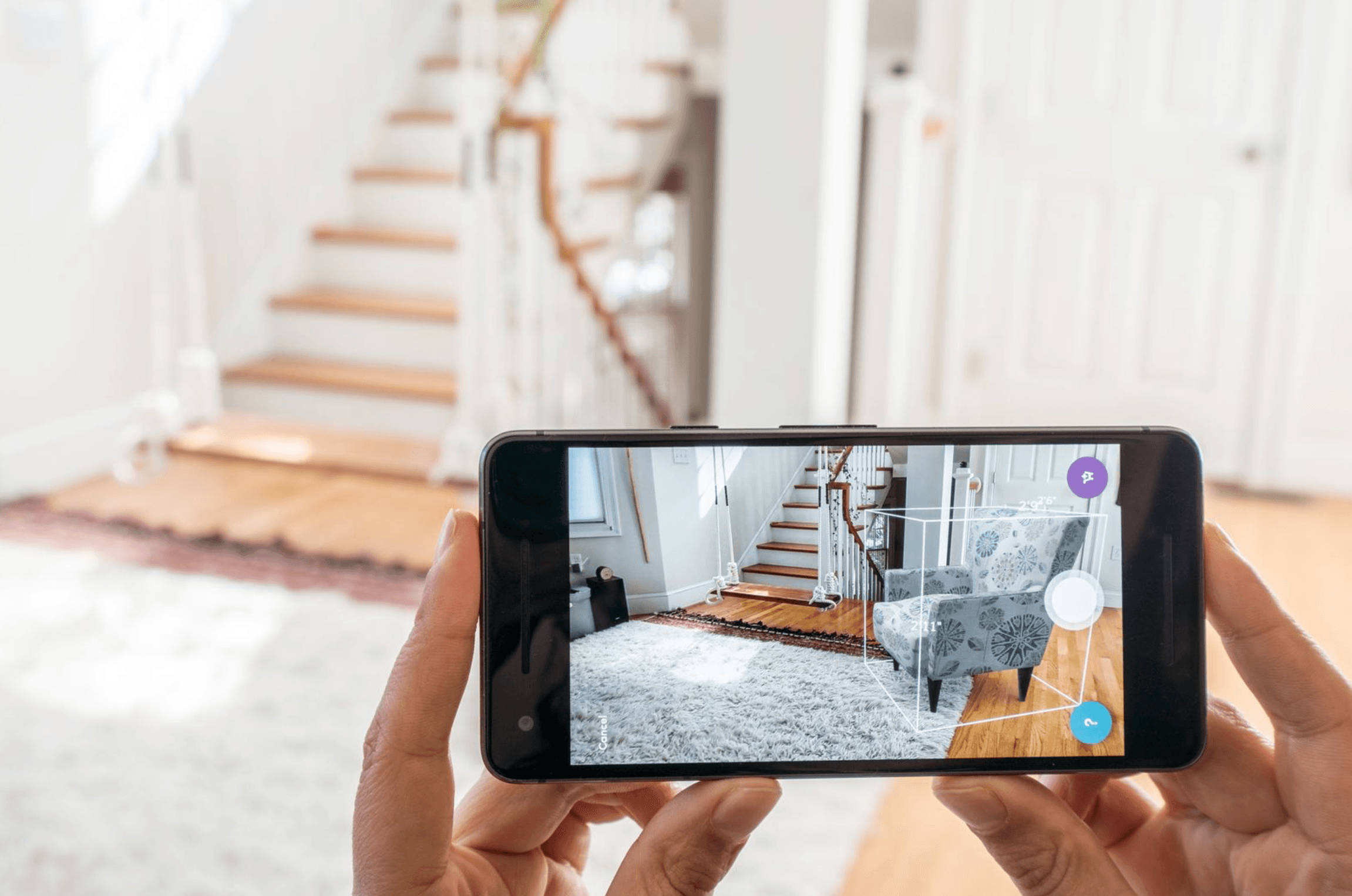
An example of a concept Mindera built for a leading UK retailer.
Executive Summary
The difference between success and failure with AI and AR Virtual Try-On comes down to one principle: Start with the problem, not the technology.
This report in an exploration in evaluating where Virtual Try-On delivers genuine ROI, grounded in real-world use cases, independent data and current-era retailer successes. AR Virtual Try-On is most effective for spatial and physical fit problems – experienced with furniture (22.7% return rate), appliances and home improvement products – where customers need to verify dimensions and placement in real environments. Retailers including IKEA, Wayfair and Amazon are already deploying this technology at scale. AI Virtual Try-On excels at appearance and styling problems, and is particularly effective with eyewear, cosmetics and accessories, where brands like Specsavers, Sephora and L’Oreal use virtual tools to boost conversion.
Fashion, despite having the highest return rates (24.4%), presents a significant challenge for any attempt at using AI and AR. The leading reason for returns is size and fit which accounts for 67% of all goods sent back by shoppers. To this day, size and fit remains better served by measurement-based tools, while fabric feel and movement cannot be reliably simulated. Style and colour, at only 23% of all returns, is more suited to AI and AR intervention. However, it is a far less lucrative problem to solve and still comes up against the limitations of both technologies.
We explore how a problem-first approach was applied in a first-hand experience through a proof of concept developed for a major UK retailer, where quantifying the cost of sofa returns caused by doorway fit issues and calculating a clear, measurable ROI projection helped the company decide on future investment.
This paper includes a strategic evaluation framework covering problem identification, success metrics, technology matching, technical fit assessments, and build versus buy considerations. It also details the key technical constraints and cost drivers for both AR and AI Try-On implementations that technology leaders must account for when planning projects.
The central message: Virtual try-on technology only creates value when deployed as a precise solution to a quantified business problem – not as an innovation initiative driven by competitive pressure.
Explore The Report
- Introduction
- Where AI and AR Virtual Try-On Work Best
- Where AI and AR Virtual Try-On Don't Work
- The Secret: Start with the problem, not the solution
- Building a value framework: Is AI and AR Virtual Try-On right for you?
- The common technical constraints
- Shared AI and AR Challenges
- Conclusion
- Appendix
Introduction
In the effort to deliver the best customer experience and save money by reducing returns retailers are turning to artificial intelligence (AI) and augmented reality (AR) technology. AI and AR Virtual Try-On, in particular, have grabbed retailers’ attention.
Why? Because they enable shoppers to visualise items like clothing, makeup, accessories and more on their own bodies virtually via their mobile devices before making a buying decision. They simulate how products look, fit or move. When used effectively, they have the power to increase purchase confidence.
While there’s no doubt that AI and AR Virtual Try-On have the potential to reduce returns and increase conversion rates, the general feeling about the technology across the sector is a mix of optimism and scepticism. That’s because, while it’s been around for some time, few implementations at the enterprise scale have delivered significant return on investment.
Despite the sentiment, investment in the technology continues to grow. Although the four independent studies we reviewed vary in terms of the current value of the market, from USD$15.18 billion (Mordor Intelligence 2025) to USD$3.8 billion (Worldwide Market Reports 2025), they all predict significant compound annual growth rates of between 28.5% (Market.US 2025) and 14.1% (Future Market Insights 2025) over the next 10-15 years.
One of the reasons much of this investment has yet to provide any meaningful return may be because little thought has been given by retailers to the specific business problems the technology might solve.

The best approach to achieving significant ROI from any technology project is starting with a quantifiable, significant business challenge. Only then do you evaluate which technology is the right tool to overcome it - and when AI and AR technology has the potential to be that tool, this is the guide for making an informed decision.
In this white paper we drill down into AI and AR Virtual Try-On to identify its most effective applications, together with a framework for evaluating if it’s right for a retailer’s specific business challenge.
We also look at the common technical constraints, what matters most to the customer, and how best to approach implementation. Plus, we explore how an innovative proof of concept (PoC) was developed for a major UK retailer with the power to generate significant and measurable ROI through an application that is unlikely to have been identified without going problem-first.
It might just save retailers from falling into the ROI innovation trap, and becoming one of the majority of organisations (95%) that see no measurable business impact from AI, despite US$30-40 billion being invested in the technology globally (State Of AI Report 2025).
Where AI and AR Virtual Try-On Work Best
A fundamental perspective shift needs to be made to determine the best uses of AI and AR Virtual Try-On technology. It’s not about identifying whole product categories or industries with the potential to look appealing in a virtual try-on scenario, rather it’s about identifying data-backed problem categories that visualisation may solve, and these problems can apply to any product in any industry regardless of precedent.
One example of this perspective shift in practice is reassessing the notion that the fashion sector is the best or only viable use of virtual try-on. In reality there are fundamental issues with the simulation of clothing and apparel that make AI and AR Virtual Try-On impractical at the least, and at most, a liability retailers would prefer to live without. Less exciting categories like home and garden and kitchen appliances can instead be where virtual try-on really shines. The key to such differentiations, which we will explore in depth, is finding the intersection of returns data – specifically, percentage rates for certain reasons for return – and the most reliable capabilities of AI and AR Try-On technology.
AR Virtual Try-On: Best for solving spatial and physical fit problems
This version of the technology uses a mobile device’s camera and sensors to measure actual spaces. It then overlays 3D product models at a reasonably accurate scale in the physical environment.
AR Virtual Try-On can be most effective where physical dimensions, placement, or spatial relationships matter. The technology’s ability to visualise size, space and placement makes it key to reducing the 27.7% return rate for furniture (Rocket Returns 2025) due to items not fitting through doors, being the wrong size for a space, or not matching existing furniture. (See Appendix 1 for the latest comprehensive return rate data.)
For example, it can eliminate the common returns problem of customers purchasing sofas that won’t fit through their doorway – more on this later.
AR Virtual Try-On is also ideal for ensuring kitchen and laundry appliances fit designated spaces, which have a 15.8% return rate. This can help to significantly reduce installation failures, returns after delivery, and customer service costs resulting from inaccurate pre-purchase measurements in this category. The same goes for placing products in gardens and outdoor spaces, which currently experience a 14.2% return rate and low conversion rates due to the misjudgement and uncertainty inherent in buying these large big-ticket items.
By accurately visualising flooring, wall colours and fixtures in a customer’s actual room, AR Virtual Try-On can also help avoid shopper hesitation that results in abandoned carts in a category where conversion rates are just 1.5% (Statista 2025) (see Appendix 2 for conversion rates across categories). It can also reduce returns following installation due to a product’s appearance not meeting a customer’s expectation.
Retailers currently deploying the technology include Wayfair with its "View in Room 3D" tool picture below (exclusive to the mobile app) that lets customers virtually stage entire rooms with furniture and decor, IKEA with its suite of Kreativ Planning Tools, and Amazon "AR View" which is integrated directly into product pages for quick try-before-you-buy previews.

AI Virtual Try-On: Best for solving appearance and styling problems
Using generative AI to edit uploaded customer photos, AI Virtual Try-On digitally applies products to the specific images provided. This requires sophisticated image processing and rendering, but not spatial measurement. It’s best suited to products worn on the body, other than clothing, or used on the face to enable customers to gauge their appearance.
AI Virtual Try-On works very well for Eyewear. It can accurately portray how spectacle frames complement a customer's face shape and features. This can play an important role in reducing the high return rates for online eyewear purchases, which hover around 15-20% (World Journal of Advanced Engineering, Technology and Sciences), and low conversion due to uncertainty in appearance. It solves similar problems for the online purchasing of accessories like jewellery, watches and fashion products, such as hats, bags and scarves, which have an overall return rate of 16.7%.
The colour-match uncertainty that drives customers to visit physical stores rather than buying cosmetics online can also be alleviated with AI Virtual Try-On. Makeup shades and nail colours, for example, can be accurately painted virtually against a customer’s skin tone., These implementations can prove pivotal in driving cost savings for retailers by reducing the high return rates for makeup and skincare of 15.7% and 11.2% respectively.
Most famous for this approach is Sephora with its “Virtual Artist” app which recorded over 8.5 million try-ons in its first year allowing users to test lipstick, eyeshadow and foundation shades against their skin tone. L’Oreal entered the space through acquiring ModiFace, which already powers Sephora’s virtual tools, and has since been rolling out the technology across its brands such as Maybelline Makeup Tools.

What about fashion?
First thoughts about applications for AR and AI Virtual Try-On usually turn towards fashion retail. This is not surprising as it’s the product category where consumers return the most items, with an overall 24.4% return rate. Within fashion, shoes are the highest overall subcategory with a return rate of 31.4%, while women's fashion is the highest category in ecommerce at 27.8%6.
The top two reasons for fashion returns are wrong size and fit (67%) followed by style and colour problems (23%), both of which have the potential to be solved by AI Virtual Try-On. In reality however, key challenges exist. For example, colour matching is quite complex and requires the digital asset (such as photo) to be matched against the true colour of the garment, and then to have the end user device faithfully represent the colour.
Meanwhile, precise size prediction remains more reliable through measurement-based tools. Movement and comfort relating to how fabric behaves and feels during wear is also a personal and subjective experience which cannot be reliably captured by AI. Plus, questions about quality – such as weight of cloth and breathability – still cannot be answered through a completely virtual experience.
Success requires understanding where the technology excels versus where traditional approaches remain superior. The main areas where AI Virtual Try-On genuinely solves fashion retailers’ problems include:
- Visual assessment: Modern generative AI can accurately render how prints, patterns, colours and styling elements appear on different body types.
- Styling confidence: Consumers can see complete outfit combinations and style variations without physical try-on.
- Personalisation at scale: Dynamic visualisation of how garments look across diverse body types and skin tones not captured in standard product photography
- Reduced friction: Eliminates the psychological barrier of "I can't imagine how this would look on me".
Currently the most successful implementations combine AI Virtual Try-On for visual confidence with measurement-based fit prediction and return-friendly policies. The technology excels at solving "how will this look on me", while complementary approaches need to handle "how will this fit me."
The big takeaway here is that AI Virtual Try-On in fashion works best when positioned as solving the visual assessment problem, not promising to eliminate all uncertainty. Retailers who understand this distinction and implement accordingly see genuine business value.
Where AI and AR Virtual Try-On Don’t Work
Just as important as applying this technology in the most effective way to the categories where it can have the most impact is recognising where it can’t help retailers at its current level of development and where it can’t generate a return on any kind of investment.
Right now, AI and AR Virtual Try-On can’t help customers make purchase decisions that involve touch, smell, taste, or other non-visual factors. This rules out perfume and food sampling. As mentioned previously, precise clothing fit prediction remains more reliable through measurement-based tools, along with tactile assessments such as how fabric feels with respect to wearability and quality.
There’s also no point implementing the technology where there is no problem to be solved. For example, where customers already convert well online without visualisation tools. The same goes for low-consideration, low-return-rate items. Understanding the scenarios where AI and AR Virtual Try-On work best is vital to optimising value and business impact. This helps to identify the problems that can be solved, which should always be the starting point, as discussed next.
The secret: Start with the problem, not the solution
Without a specific, measurable business problem as the starting point, AR and AI Virtual Try-On becomes an expensive experiment that's difficult to justify continuing or expanding. In fact, it’s the sure-fire route to failure and why most organisations (95%) currently see no measurable business impact from AI, despite US$30-40 billion being invested in the technology globally.2
This seems like a simple enough rule. However, in a highly competitive environment like global retail, the pressure to succeed and gain an edge over your rivals can throw logic out of the window. This is often driven by a common scenario. A senior executive discovers that a competitor is using a new innovation. Fuelled by the fear of falling behind, the knee-jerk reaction is to immediately get the technology team working on an implementation. After all, the board has been pushing for innovation, while vendors are selling hard. But with little thought put into what practical problem it can solve, the likelihood is that the project is judged on technical success rather than business impact.
Before companies know it, they’ve fallen into the sophistication trap. The technology itself is genuinely impressive and complex to implement correctly, which makes it easy to mistake technical achievement for business value. And this creates serious issues.
Because technology choices have been made before understanding which customer behaviours actually need changing, ROI becomes impossible to measure because success metrics were never clearly defined. Engineering teams end up building impressive technology that customers don't need or use.
This wastes considerable time, effort and investment – not to mention the impact it can have on a team’s morale. Keen to save face and justify their decision, senior executives point to engagement metrics rather than business outcomes. So, it’s easy to see that once set in motion, this can be a difficult spiral to break out of. However, seeing the real-world business impact of taking a problem-first approach to AI and AR Virtual Try-On can certainly help. Which brings us to…
A first-hand example of the problem-first approach
In the Home and Garden category, furniture has the greatest customer return rate. At 22.7% it’s the third highest across all subcategories in 20256, behind only shoes (31.4%) and women's fashion (27.8%). When one of the UK’s largest homeware retailers was investigating this costly problem for itself, the team found returns disproportionately driven by sofas and other large items. The stated reason: these products were too big to fit through doors and up staircases.
This single issue was having a knock-on impact across the business. Each return was costing the company in terms of logistics, because unsuitable items needed to be collected. The return became a lost sale. Restocking’s workload was increased. Valuable customer service time was taken up handling the customer query.
Drilling down into the problem, we quantified the costs. were able to calculate the return rate, cost per return and total annual cost of the issue – and subsequently, the savings to the business if the problem could be solved.
Working with the retailer, we came up with the hypothesis that if customers could virtually verify the fit items before purchase, they'd choose more wisely or decide not to purchase at all rather than buying and returning. The key point here being that the ROI case was built before choosing the technology to solve the problem and implementing it. If AR’s spatial capabilities and an easy-to-use experience embedded in the checkout could reduce the return rate by a third or a half, it would generate a specific amount in annual value. The question wasn't: “How can we use AR?”, but rather: "What would actually prevent these specific returns?"
Harnessing the physical space scanning capabilities that AR can deliver, we developed a virtual tool that could be operated by customers via a new feature in the mobile app, which was able to measure door and corridor dimensions. With the user interface focused on the fit verification question rather than general exploration, it was quick and easy to use. Success metrics were also established, tied directly to return rates rather than engagement or impressions. This provided clarity for assessing ROI related to the specific problem the tool was designed to solve.
The AR Virtual Try-On tool was a proof of concept that delivered a clear projection for a reduction in returns such that a clear ROI was expected and made the case for justified investment in the technology and its expansion across the business.
Starting with a measurable business problem, then using the right technology to solve it allowed the project to stay tightly focused on both impact and value. Building the ROI case in advance ensured any investment was more than covered by the costs saved through the implementation.
The lesson here is that AR is not valuable as a technology alone, only as part of a solution that solves a key business challenge.
Building a value framework: Is AI and AR Virtual Try-On right for you?
The following strategic framework can be used to ensure AI and AR Virtual Try-On is applied appropriately from a problem-first perspective to solve measurable business challenges.
Pinpoint your most expensive customer behaviour problems
First identify what customer activities are costing the business the most money. This means, for example, accurately evaluating the annual cost of problems like returns, incorrect purchases, abandoned carts, sizing issues, uncertainty over buying decisions, etc.
It’s important to quantify the specific impact of each challenge. Then assess which are being caused by customers’ inability to visualise or evaluate key buying criteria before they purchase. Ranking these problems by both cost and the likelihood of virtual visualisation changing behaviour will determine the relevance of AI and AR Virtual Try-On.
Define what success looks like before having technical discussions
Avoid considering a technology solution before being clear on the outcomes required and setting out the business case. Establish exactly what customer behaviours would need to change to solve the problem and calculate what this looks like in terms of measurable change. For example, how much of a percentage would returns need to be reduced by, conversion rate increased or customer service calls decreased to get a return on the investment.
Sometimes the framework ends here because your calculations show the cost and effort to solve the problem far outweigh the reward for solving it - examples include pay-back-periods extending too far into the future, break-even points that are unrealistically high, or high levels of uncertainty due to influential factors out of your control. In these moments, it might make sense to pivot and look for another more profitable problem to solve.
Match problem to technology type
Once the challenges have been identified where virtual try-on technology has the potential to make an impact, it’s time to determine whether AR or AI is the most appropriate route to take.
Consider AR Virtual Try-On for the following spatial and placement issues:
- Customers can't determine if a product fits their space
- Returns are driven by size/scale misjudgement
- Conversion loss is due to uncertainty about physical compatibility
- High-value or custom items where successful delivery and/or installation matters
Consider AI Virtual Try-On for the following appearance and styling issues:
- Customers can't visualise how a product looks on them
- Returns are driven by unexpected appearance when tried on
- Conversion loss is due to uncertainty about personal suitability
Uncertainty over colour, style or aesthetic matching
Remember that if the problem is the result of neither spatial nor appearance issues, like those identified above, AI and AR Virtual Try-On won't solve it.
Evaluate technical fit
Having clearly defined what you need to achieve, it’s not simply a case of throwing technology at the problem. It’s vital to understand in detail how virtual try-on should be used to ensure implementation actually supports the business goals.
Try-on necessity
For example, when considering AR Virtual Try-On solutions, establish if customers really need to see products in their own physical spaces – could a generic virtual space suffice? IKEA, for example, provides both options. Consider how precise the try-on experience must be and the level of detail acceptable from the customer – is millimeter precision crucial or is the expectation much lower? Determining the necessity and extent of personalisation and accuracy is critical for identifying which areas of the project require the most investment.
Similarly, from an AI-Try-On perspective, identify whether or not customers need to see products on their own face and body. Are there meaningful variations in how products look on different people? Can appearance simulation be accurate enough?
Specifying the technical fit in this way can save cost and time going forward by only implementing what’s necessary to deliver the success required.
Alternative solutions and customer knowledge
It’s also important to consider whether AI or AR Virtual Try-On is necessary at all. Are there simpler, less expensive solutions that might work? Such as better product photography, detailed measurement charts, comparison tools and video demonstrations.
Also, don’t forget the target customers. Do they have the devices, browsers and technical comfort to use AR and AI Virtual Try-On effectively? If not, the adoption of the technology could be seriously affected.
Putting the hypothesis to the test
Having established the right approach to take, define the minimum viable implementation necessary to be able to evaluate the hypothesis on behavioural change. The sooner this can be developed, the faster the effectiveness of the approach can be gauged. Any adjustments can then be made at an early stage. This saves fully formed solutions being delivered, only to find key changes need to be implemented, which increases pressure on cost, resources and time to market.
Understand total cost of ownership realistically
It’s important to take into account the different cost profiles between the two virtual try-on technologies and weigh up the pros and cons.
AR has higher upfront asset creation costs. However, ongoing costs are more predictable. Meanwhile, AI has complex model development or licensing costs and ongoing computational costs that scale with usage.
Here’s a breakdown of the key costs related to each one:
AR Virtual Try-On costs:
- 3D asset creation for entire catalogue (expensive and time-consuming)
- Spatial tracking and measurement accuracy requirements
- Testing across diverse physical environments
- Ongoing asset maintenance as products change
- Limited browser/device support requiring fallbacks
AI Virtual Try-On costs:
- AI model training and refinement for realistic rendering
- Image processing infrastructure at scale
- Diverse testing across skin tones, face shapes, body types to avoid bias
- Ongoing model updates as AI capabilities improve
- Privacy considerations for facial/body image capture and processing
Plan for measurement and iteration
Before finally flicking the switch and launching a virtual try-on project, having covered all the bases set out above, the strategy for measuring the outcomes should be firmly established. Don’t leave this until the work has been completed, because there’s likely to be a need for some form of continuous assessment to enable any necessary adjustments to be made to keep the project on track.
There are important decisions to be made and questions to be answered to ensure measurement is undertaken as effectively as possible. These include:
- How to isolate the impact of AI and AR Virtual Try-On from other variables affecting customer behaviour.
- What testing approach should be taken. For example, A/B tests with a control group, phased rollout by product category, or a pilot with a subset of customers.
- What are the key decision points? For example, if a certain result is achieved after a particular timeframe, what should be done next?
- How to communicate results internally, especially if they're not immediate.
Following this framework will help establish the measurable business case for using AI and AR Virtual Try-On technology to ensure key outcomes are realised that optimise impact, value and ROI.
The common technical constraints
Technical realities should be taken into account when planning implementations to ensure they have minimum impact on the outcomes. Here are three key aspects of each version of the technology that require vigilance when planning projects, along with key factors affecting both AI and AR:
AR Virtual Try-On Limitations:
Spatial tracking and measurement
It’s important to recognise that accuracy in spatial tracking and measurement depends on device cameras and sensors. These are LiDAR on the latest iPhone versions and camera-only on other devices. LiDAR are ‘active’ measuring of 3D distances directly using laser pulses, while cameras are ‘passive’ and record 2D images, relying on AI or photogrammetry software to estimate depth and 3D structure.
Lighting conditions significantly affect tracking quality, with floor detection and surface mapping not reliable in all environments.
3D asset requirements
Potentially photorealistic 3D models are necessary to maintain the credibility of your tool, so file sizes must balance that quality against load times to optimise the customer experience.
Asset creation typically costs between £500 to £2,000 upwards per SKU when designed from scratch however 3D scanning methods can significantly reduce the time and cost depending on complexity. Independent of upfront cost it’s important to recognise that maintaining and updating the library is an ongoing burden to keep up with evolving products.
Platform limitations
Variations across platforms can affect the performance of AR Virtual Try-On. Currently, WebXR support remains inconsistent between browsers, while there are capability differences between iOS and Android that should be taken into account.
Native app implementations are more reliable, but limited in reach. Plus, some older devices can struggle to run AR experiences.
AI Virtual Try-On Limitations
Image processing complexity
AI Try-On accuracy is not consistent across products, varying dramatically in some cases. At one end of the spectrum are spectacles, which work consistently well with the technology. Clothing, however, can be more troublesome.
Lighting, angle and image quality of customer images can have a major impact on processing results, and those variations in uploaded images require more powerful AI models to maintain realistic rendering of materials, textures and shadows.
Bias and accuracy concerns
AI models must work accurately across diverse skin tones, face shapes and body types. This demands ongoing testing and model refinement for consistent performance.
Be on the look-out for training data bias, as this can lead to poor performance for underrepresented groups, which presents both an ethics issue and a business risk as it can deter customers from using a retailer.
Privacy and data considerations
Facial recognition and image processing regulations vary by region making it vital to keep up with local legislation. Plus, customers are increasingly concerned about how their images are used for AI training, so robust data processes and transparency are essential.
Even when data retention policies are clear, some customers may still refuse to upload photos due to personal privacy concerns.
Shared AI and AR Challenges
Some factors affect both AI and AR Virtual Try-On, such as usage patterns differing between mobile and desktop and customer tolerance for loading times being universally low. It’s also important to ensure there are fallback experiences for customers who can't or won't use the technology, while integration with existing purchase flows should be carried out without creating friction.
Building versus buying
So, with the business case made firmly in favour of implementing AI and AR Virtual Try-On technology following careful consideration of all the criteria, the next big decision is whether to build the solution in house or buy it from a supplier.
The chosen route will directly influence ROI, so getting this right is vital, and the pros and cons vary between the two versions of the technology.
AR Virtual Try-On build/buy considerations
Specialist platforms like Shopify AR, Zakeke and Threekit offer faster time-to-market, but come with ongoing costs per interaction. In contrast, custom builds provide more cost control, but require expensive specialised AR expertise. And in any case, the biggest cost element in AR Virtual Try-On is often 3D asset creation and management regardless of platform choice.
Faced with this rather complex picture, most successful projects we’ve seen have started with a third-party platform for core AR functionality, combined with bringing in an experienced technology partner.
AI Virtual Try-On build/buy considerations:
Custom builds are rarely justified with AI Virtual Try-On unless the target product category is underserved by existing solutions. That’s because AI model development requires specialist expertise that most retailers don't have in house. Furthermore, white-label solutions from the likes of Perfect Corp, ModiFace, Banuba and others are well developed for specific categories.
However, there is one important factor to be aware of when setting budgets and calculating long-term ROI: computational costs scale with usage. This means the more successful adoption is, the more expensive the project becomes.
The real cost driver for both: Keeping up with innovation
With any successful AI and AR Virtual Try-On implementation, it’s important to recognise that costs are probably going to be ongoing. This means as a rule of thumb factoring in 20-30% of the build costs annually for maintenance, updates and improvements. Having quantified the return on investment for such an initiative, you should feel confident that any and all ongoing expenses are within the budget created by your cost savings.
Conclusion
AR and AI Virtual Try-On is an exciting technology that has the potential to deliver key benefits to retailers that can help reduce returns and boost conversion rates. But they can only be realised when the technology is in service of a specific, quantifiable business problem, rather than a response to competitive pressure or innovation expectations.
The technology leaders who get the most out of any technology are not necessarily the ones with the largest budgets or the most sophisticated engineering teams, rather they are the ones who resist the pressure to act without defining the problem and approach problem discovery with the same rigour as they would do in building the solution.
The question, ultimately, is not whether AR or AI virtual try-on is worth it. It is whether it is the right tool for your specific customer behavior problems - and if the answer is yes, whether your organisation is ready to approach the implementation with a level commitment that can only be achieved through a clear expectation of a quantified return on investment.
Optimise AI and AR Try-On for your business. Contact our Retail Tech team today…
Appendix 1
Which products do consumers return the most?
Fashion and Clothing: 24.4% return rate
- Shoes: 31.4% (highest subcategory overall)
- Women's Fashion: 27.8% (highest in all ecommerce)
- Children's Clothing: 22.1%
- Men's Fashion: 19.2%
- Accessories: 16.7%
Main reasons for returns:
- Size and fit – 67%
- Style and colour – 23%
- Quality issues – 10%
Home and Garden: 18.9% return rate
- Furniture: 22.7%
- Bedding and Bath: 21.3%
- Home Decor: 19.4%
- Kitchen Appliances: 15.8%
- Garden Equipment: 14.2%
Main reasons for returns:
- Assembly problems – 67% (higher than ready-to-use items)
- Furniture size and space fit problems (furniture) – 58%
- Home decor style issues – 47% of all returns
Beauty and Personal Care: 12.3% Return Rate
- Makeup: 15.7%
- Fragrances: 14.3%
- Skincare: 11.2%
- Hair Care: 9.8%
- Tools and Accessories: 8.9%
Main return reasons:
- Disappointed with scent – 67% of fragrance returns
- Colour matching issues – 52% of make-up returns
- Allergic reactions or skin sensitivity – 34% of skincare returns
Electronics and Technology: 11.8% return rate
- Gaming Equipment: 15.3%
- Smart Home Devices: 14.9%
- Audio Equipment: 13.2%
- Laptops: 12.7%
- Smartphones: 8.4%
Main reasons for returns:
- Defective or damaged items – 43%
- Compatibility issues – 28% of returns
- Performance dissatisfaction – 19%
Books, Media, and Entertainment: 7.2% Return Rate
- Video Games: 11.4%
- Educational Materials: 9.3%
- DVDs/Blu-rays: 8.7%
- Physical Books: 5.8%
- E-books: 3.2%
Main return reasons:
- Shipping damage and ordering errors – 67%
- Content dissatisfaction – 23%
Appendix 2
Online shopping conversion rates worldwide

[Source: Statista Q4 2025](Source: Statista Q4 2025)
About Mindera
Mindera is a global consulting and engineering company with 1100+ people, delivering technology solutions across 9 locations — from Brazil to Australia. We work across diverse industries, from Fintech to the Public Sector, offering services in Data, AI, Mobile, and more. We partner with our clients, to understand their customer journeys, their product and deliver high performance, resilient and scalable software systems that create an impact in their users and businesses across the world.